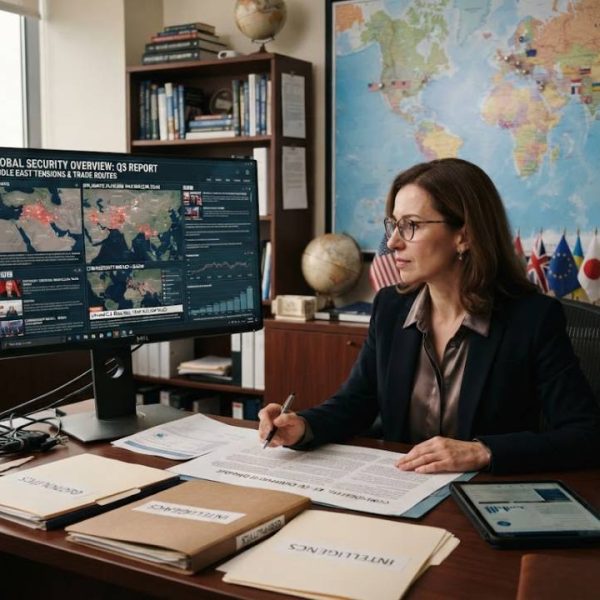
Coverage of geopolitics and international relations depends on tracking statements, treaties, and diplomatic communications issued in dozens of languages by governments, international bodies, and think tanks around the world. An analyst or outlet trying to follow a fast-moving diplomatic situation needs translated source material quickly enough to actually inform timely reporting and analysis, not weeks after the underlying event has already been overtaken by new developments.
Organizations covering international relations that rely on ad hoc translation, whichever staff member happens to read a particular language, describe missing important nuance in official statements simply because no one available at the time had the specific language expertise a particular document required.
The organizations producing the most reliable geopolitical analysis are not necessarily the ones with the largest research staff. They are the ones that built genuine infrastructure for translating diplomatic and policy source material quickly and accurately.
Why diplomatic language resists casual translation
Diplomatic communications are often deliberately precise, with specific word choices carrying meaning that a generic translation can flatten or miss entirely, turning a carefully calibrated statement into something that reads as more or less confrontational than the original actually intended.
Analysts who have worked with poorly translated diplomatic source material describe drawing incorrect conclusions about a government's actual position, simply because subtle but deliberate phrasing did not survive the translation process intact.
Where artificial intelligence genuinely helps this work
An ai powered translation management system gives research teams a fast first-pass translation of high-volume source material, official statements, treaty texts, policy papers, that analysts can then review and refine, dramatically reducing the time between a document's release and when a properly reviewed English version becomes available.
Wordbeam's ai powered translation management system is built for exactly this kind of research workflow, giving analysts a genuine head start on dense policy and diplomatic content while preserving the human review step that catches the subtle nuance automated translation alone would miss.
Publishing translated analysis across the outlet's own platforms
Once source material is translated and analyzed, outlets covering international relations often need to publish their own analysis across multiple language editions, reaching audiences in the very regions the coverage concerns, which introduces its own separate translation demand beyond the initial research phase.
A content management system translation workflow connects that outbound publishing directly to the outlet's platforms, letting a translated analysis piece go live across every language edition without requiring a separate manual publishing process for each version.
Wordbeam's content management system translation integrations handle that publishing step efficiently, connecting translated content directly to the platforms where an outlet's international readership actually finds it.
What accuracy actually means in this context
Geopolitical analysis carries real consequences when it gets the underlying facts wrong, and organizations covering this space describe translation accuracy as inseparable from their broader credibility, since a translation error in a foundational source document can undermine an entire analysis built on top of it.
Research organizations that have built rigorous translation review processes report far fewer corrections and retractions related to mistranslated source material, since errors get caught during the review stage rather than surfacing publicly after publication.
Researchers working with primary sources in several languages face a constant trade-off between speed and defensibility. The moment a document is going to be quoted or cited publicly, a certified translation becomes the version that can actually be stood behind. Working drafts are fine for reading; published claims need a traceable text.
Coordinating across a genuinely global network of sources
Organizations tracking international relations often maintain networks of local contacts, stringers, and regional experts submitting source material in their own languages, and keeping this incoming flow of multilingual content organized and properly triaged for translation requires real coordination.
Teams that have built a clear intake and translation process for this kind of network report catching important regional developments faster, since incoming material gets translated and reviewed promptly rather than sitting untranslated until someone happens to have bandwidth.
The stakes of getting a translated quote wrong
A misquoted or mistranslated statement from a foreign official can create genuine diplomatic friction or embarrassment, and organizations covering this space take direct quote translation especially seriously, often requiring a second reviewer specifically for any material destined for direct quotation.
Outlets that have implemented this extra review step for quoted material report far fewer disputes with sources over how their statements were represented, since the additional scrutiny catches translation ambiguity before it reaches publication.
Building institutional memory across analyst turnover
Research organizations covering international relations experience regular staff turnover, and an organization relying on individual analysts' personal familiarity with a region's language and terminology loses that knowledge when the analyst moves on, unless the underlying translated source material and terminology decisions are documented somewhere searchable.
Organizations that maintain a shared, searchable archive of translated source documents and terminology decisions find that new analysts get up to speed on a region's ongoing diplomatic history considerably faster than those starting from scratch with each staffing change.
Where broader standards inform this work
The World Economic Forum has published research touching on how international organizations manage cross-border communication, offering useful context for outlets benchmarking their own translation processes against broader institutional practice.
The Globalization and Localization Association has similarly documented best practices for high-stakes translation environments, giving research organizations a reference point for evaluating their own workflow against industry standards.